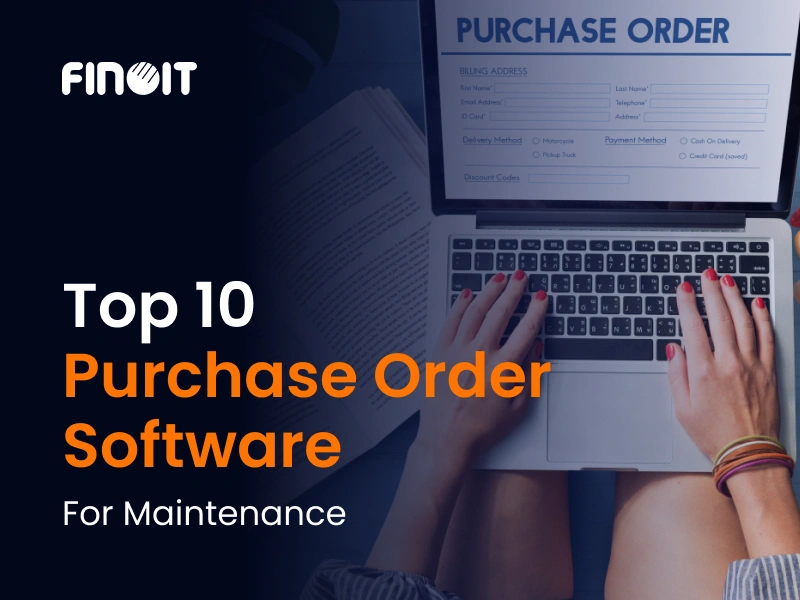
Top 10 Purchase Order Software for Maintenance

A well-managed purchase order process is at the heart of the procurement cycle and can make all the difference for maintenance operations. In any supply chain, it dictates how quickly materials move, how efficiently teams can work, and how smoothly operations run. When the process is streamlined, everything falls into place, when it’s not, it slows down workflows and impacts the entire supply chain.
A purchase order system built for maintenance is vital to keeping operations running efficiently. To help organizations navigate this critical aspect, we have reviewed and compared the top solutions available. In this blog, we highlight the 10 best purchase order software solutions for maintenance and operations, examining their features, advantages, pricing, support, integrations, and security.
1. Zapium
Zapium is an all-in-one maintenance-centric purchase order software built for teams that need deeper coordination between operations, maintenance, and purchasing. It combines purchase order creation with vendor management, inventory tracking, asset lifecycle insights, and approval workflows, accessible from desktop and mobile. Because Zapium is designed to support maintenance-heavy workflows, it’s particularly useful where POs must tie into work orders and inventory replenishment.
Key Features:- Automated PO creation, approval workflows, and lifecycle tracking that speed up procurement cycles.
- Vendor and quote management with built-in comparison tools to identify cost-effective suppliers.
- Inventory sync with PO updates, including real-time stock level changes and automatic logging on receipt.
-
Invoice management and audit trails that support reconciliation and compliance reporting.
- G2: 4.9 / 5
- Capterra: 4.8 / 5
- Strong integration between procurement, maintenance, and asset workflows, eliminating silos between departments.
- Intuitive mobile access that lets field technicians capture delivery receipts and update POs on the go.
- Built-in vendor and inventory management that prevents overstocking and stockouts.
Pricing differs across the available plans – Essential, Professional, Business, and Enterprise. Discounts are provided for annual subscriptions, and quotes require a demo.
Support:Zapium offers onboarding support, training sessions, email and phone support, and personalized customer success guidance.
Integration:Integrates with ERP and accounting software systems (e.g., QuickBooks Online), bidirectional data sync with asset/maintenance modules, plus support for custom integrations and IoT sensor data.
Security:Zapium uses data encryption, access control, authentication safeguards, and backup protocols to protect sensitive procurement and asset information. It adheres to best-practice security standards across compliance and audit requirements. Best For:
Maintenance and operations teams that want tight integration of procurement with inventory, asset tracking, and maintenance workflows, making it ideal for manufacturing sites, field service, and facilities operations.
2. Precoro
Precoro is one of the best procurement software built to automate purchase requests, approvals, purchase orders, and spend analysis for mid-sized to large operations.
Key Features:- Flexible workflow automation with multi-stage approval routing and custom rules.
- 2-way and 3-way invoice matching to streamline reconciliation and accounts payable accuracy.
- Supplier catalog and contract management to centralize vendor info and terms.
- G2: 4.8 / 5
- Capterra: 4.8 / 5
- Mobile-friendly interface that supports approvals and PO creation from any device.
- Strong reporting and analytics that help pinpoint cost savings and supplier performance.
- Automated matching reduces errors and accelerates PO-to-payment cycles.
Offers three pricing plans each with three different pricings. The Core plan is available at USD 499 while Automation is available at USD 999. The Enterprise plan is a custom plan. All pricings are per month billed annually.
Support:Email support, knowledge base resources, guided onboarding, and dedicated customer success teams are available.
Integration:Precoro integrates with QuickBooks Online, Xero, Sage, NetSuite, Microsoft Dynamics 365, Slack, and other financial or collaboration tools.
Security:Includes role-based access controls, GDPR compliance, audit trails, SSO, and IP whitelisting for enhanced data and access security.
Best For:Operations teams that want centralized procurement visibility and automated budget control across maintenance and broader spend categories.
3. Procurify
Procurify is a procure-to-pay and purchase order platform built to automate purchasing workflows, improve spend visibility, and enforce financial controls on purchasing activities.
Key Features:-
Auto generation of purchase orders when purchase requests are approved.
-
Mobile access to create, approve, and receive POs from anywhere.
-
Customizable purchase order fields and real-time status tracking.
-
Blanket purchase orders and recurring spend management.
- G2: 4.6 / 5
- Capterra: 4.6 / 5
-
Intuitive interface that reduces training time and supports quick adoption across teams.
-
Real-time visibility into budgets and PO statuses.
-
Mobile capabilities streamline expense management and help handle tasks on the go.
Exact pricing details are available on a custom quote.
Support:24/5 support and a dedicated success manager to guide implementation.
Integration:Integrates with QuickBooks, NetSuite, Sage Intacct, Microsoft Dynamics 365, PunchOut catalogs, and API connectivity for ERP and accounting systems.
Security:Enterprise-grade security protocols with role-based access controls, audit trails, and compliance tracking built into approval workflows.
Best For:Organizations seeking comprehensive purchase order automation with spend visibility and approval governance across multiple teams and cost centers.
4. UpKeep
UpKeep is a maintenance and operations management platform that includes purchase order capabilities tightly integrated with asset management, inventory, and work orders.
Key Features:-
Centralized portal for submitting and approving purchase order requests tied to maintenance needs.
-
Automated inventory restocking upon receipt of purchase orders.
- Customizable purchase order numbering and fulfillment tracking.
- G2: 4.5 / 5
- Capterra: 4.6 / 5
-
Seamless integration between maintenance, inventory, and purchasing, reducing manual steps.
-
Strong mobile accessibility supports field technicians and remote teams.
- Notifications and automation help prevent stockouts and delayed repairs.
It provides four subscription options: Essential ($20), Premium ($55), Professional, and Enterprise. The last two are custom-priced plans, with all rates charged per user each month.
Support:24/7 phone, email, and chat support with implementation and training options available.
Integration:Supports integrations with ERP/accounting tools via API and automation platforms; can also integrate PO actions with tools like QuickBooks via Zapier.
Security:Includes access controls and standard security protocols, though advanced role-based restrictions for viewing PO data may require higher-tier licenses in some configurations.
Best For:Maintenance and operations teams that want purchase orders fully contextualized within asset and inventory workflows for smoother operational procurement.
5. Coupa
Coupa is an enterprise-grade spend management and procure-to-pay platform that helps organizations automate purchasing, enforce compliance, and gain end-to-end visibility into spend – from requisitions to purchase orders to payments.
Key Features:-
Unified procure-to-pay workflows, automating purchase request creation through approval, order issuance, and invoice matching.
-
AI-driven spend analytics and dashboards that provide insights into cash flow, compliance, and procurement performance.
- Supplier catalogs and punch-out capabilities, enabling users to buy through preferred vendor networks.
- G2: 4.2 / 5
- Capterra: 4 / 5
-
Comprehensive spend visibility across global purchasing and accounts payable.
- Strong compliance and control features, with approval workflows linked to budgets and policies.
There are four plans: Free, Verified (USD 549 per year), Premium Support (USD 499+ per year) and Advanced (USD 4800 per year). Each plan comes with its own set of features.
Support:Dedicated enterprise support, professional services, training programs, and a broad partner ecosystem for implementation.
Integration:Deep integrations with ERP and financial systems such as SAP, Oracle, Netsuite, plus broader API connectivity to accounting, HR, and analytics platforms.
Security:Enterprise-level security and compliance standards, including role-based access, audit trails, and data governance; cloud-native architecture supports secure data exchange.
Best For:Large enterprises with complex purchasing needs that require full procurement automation with strategic spend insights.
6. Pipefy
Pipefy is a workflow automation and low-code process platform that enables procurement management and purchase order workflows to be built, automated, and scaled without heavy IT or coding overhead.
Key Features:- Visual, customizable workflows from purchase requisition to supplier engagement and PO issuance.
- Reusable templates and forms that ensure policy compliance and standardize data capture.
-
Collaboration portals that centralize documents, approvals, and vendor communications.
- G2: 4.6 / 5
- Capterra: 4.6 / 5
-
Low-code/no-code workflow builder empowers teams without developers.
-
Efficient approvals and automation reduce cycle times and errors.
- Cross-functional applicability allows workflows to extend beyond purchasing.
There are three plans: Free, Business, and Enterprise and you need to connect with the sales team to get the actual pricing across the later two plans.
Online resources, community help, email and chat support, plus onboarding resources.
Integration:Connects with NetSuite, Oracle, QuickBooks Online, SAP data, Sage Intacct, Workday, Xero, Zoho, and supports API integrations for custom systems.
Security:SOC2, ISO 27001, ISO 27701, encryption in transit and at rest, SSO and MFA options for user authentication.
Best For:Procurement teams that want flexible, automated PO workflows with low-code customization and strong collaboration tools.
7. Planergy
Planergy is a cloud-based procure-to-pay and purchase order platform that helps organizations streamline PO creation, enforce approval workflows, and gain full transparency into spending and budget performance across departments.
Key Features:- Auto-generation of purchase orders from approved requisitions with customizable templates.
- Three-way matching of POs, receipts, and invoices to prevent errors and overpayments.
- Real-time spend visibility and custom reporting dashboards to monitor budgets and supplier performance.
- G2: 4.9 / 5
- Capterra: 4.6 / 10
- Simplifies purchase request routing and PO approvals with visual workflows and budget checks.
- Centralized audit trails capture actions, approvals, and changes for clear compliance evidence.
- Integrates natively with accounting systems, reducing manual reconciliation work.
Custom quotes are provided based on organization size and modules.
Support:Offers onboarding support, online help resources, email and phone support, and personalized assistance throughout implementation and use.
Integration:Connects with popular ERPs and accounting tools like QuickBooks, Sage Intacct, NetSuite, Xero, Microsoft Dynamics, and custom API integrations for seamless data sync.
Security:Enterprise-level security with data encryption, permission controls, audit trails, and compliance support for financial controls.
Best For:Teams that require robust purchase order automation tied to real-time budget controls and audit-ready spend visibility across maintenance and operational functions.
8. Spendwise
Spendwise is a cloud-based spend management and procurement tool that includes purchase order capabilities alongside broader expense and invoice tracking.
Key Features:- Create, track, and manage purchase orders with automated approval workflows.
- Real-time spending and budget tracking across departments.
- Unified dashboard for procurement, invoices, and vendor communication to reduce manual work.
- G2: 4.7 / 5
- Capterra: 4.6 / 5
- Affordable entry pricing makes it accessible to smaller operations.
- Clean interface and simple setup reduce training time for new users.
- Quick PO creation and streamlined approval flows help reduce cycle times.
Offers three plans: Basic ($9), Pro ($19), Enterprise (pricing available on custom quote). Pricings are per month. The first plan is available even for a single user while the later two plans require at least 5 users.
Support:Provides email support, onboarding resources, and tutorials as part of the subscription plans.
Integration:Connects with accounting platforms and tools via APIs; common integrations include basic ERP sync and export features for financial systems.
Security:Offers standard cloud security protocols including encryption and user access controls, suitable for mid-market deployment.
Best For:Small and mid-sized maintenance or operational teams looking for affordable, easy-to-use purchase order and spend management software that improves oversight without heavy customization.
9. Tradogram
Tradogram is a cloud-based procurement and purchase order solution designed to help small to mid-sized teams control spending, manage suppliers, and automate procure-to-pay workflows.
Key Features:- Configurable approval workflows that align with internal purchasing policies and cost thresholds.
- Purchase order management including automated PO numbering, customizable templates, and bulk PO creation.
- Supplier and catalog management to consolidate vendor records, item lists, and performance data.
- G2: 4.3 / 5
- Capterra: 4.5 / 5
- Offers a freemium plan with limited transactions, which helps small businesses get started without upfront cost.
- Robust supplier management tools improve vendor insights and negotiations.
- Integrates adjustable spend controls and real-time budgeting tools.
Offers three plans which are Pro, Premium, and Enterprise. Pro is available at $225 per month and Premium is available at $425 per month. For Enterprise, a custom quote can be sought. All pricings are billed annually.
Support:Online help center, knowledge base articles, email support, and guided onboarding options.
Integration:Offers integrations with major accounting and ERP systems (including QuickBooks, Xero, Oracle NetSuite, and Sage), plus API options for custom workflows.
Security:Standard cloud security protocols including data encryption, user access permissions, and audit logs.
Best For:Small and mid-market maintenance or operations teams that want cost-effective, flexible purchase order workflows with low-entry-barrier pricing and solid supplier management.
10. ProcurementExpress.com
ProcurementExpress.com is a purchase order and procure-to-pay tool that streamlines purchasing processes, simplifies approvals, and gives operations teams clear visibility into spend and budgets.
Key Features:- Fast PO creation and approval with intuitive forms that reduce cycle times.
- Budget tracking and real-time spend dashboards that show current and projected expenses against allocated funds.
- Support for supplier catalogs and punch-out systems, enabling buyers to select from approved vendor lists.
- Invoice scanning and three-way matching that link purchase orders, invoices, and receipts for accurate record keeping.
- G2: 4.7 / 5
- Capterra: 4.7 / 5
- Strong approval and compliance controls help maintain governance over spend.
- Integrates punch-out catalogs from major suppliers to speed purchasing.
- Mobile access enables approval and PO review anywhere.
Offers four plans which are Basic ($415), Better ($900), Best ($2550), and Enterprise. All pricings are per month and at different capacities.
Support:24/7 support via email and chat, onboarding assistance, and training documentation to assist teams during rollout.
Integration:Connects with systems like QuickBooks, Sage 50, Sage 200, and other financial and inventory platforms; also supports Zapier for broader automation.
Security:Includes role-based user permissions, encrypted data transfer, and audit logs that support compliance and traceability across teams. (Vendor emphasizes best practice cloud security.)
Best For:Operations teams that want transparent, user-friendly purchase order workflows with strong budgeting and supplier catalog support which is a good fit when teams are scaling up from spreadsheets or basic systems.
Best Practices for Selecting Purchase Order Software for Maintenance
Following are best practices that will help you identify a purchase order management system that will streamline your procurement process:
- Prioritize maintenance-centric workflows over generic procurement features
Look for software that naturally supports links between purchase orders, work orders, assets, and spare parts. A system designed only for finance or office procurement may struggle to handle urgent maintenance requests or asset-specific purchasing.
- Evaluate how well the software handles unplanned purchases
Breakdowns and emergency repairs are inevitable. The software should allow fast PO creation, quick approvals, and flexible overrides without bypassing audit trails or controls.
- Assess inventory and spare parts integration depth
Choose software that can trigger purchase orders based on minimum stock levels, consumption trends, or maintenance schedules rather than relying solely on manual requests.
- Review approval flexibility for different maintenance scenarios
Approval workflows should adapt to urgency, cost, and asset criticality. Go for a system that allows dynamic approval rules as it performs better than rigid, one-size-fits-all approval chains.
- Examine vendor management capabilities for maintenance suppliers
The software should support supplier categorization, historical pricing visibility, and performance tracking to support better sourcing decisions.
- Validate mobile usability for field technicians and supervisors
Maintenance decisions frequently happen on the shop floor or in the field. Mobile-friendly interfaces for raising requests, approving POs, and confirming deliveries are critical for timely procurement.
- Check reporting relevance for maintenance cost analysis
Go beyond generic spend reports. The system should support insights such as spend by asset, recurring emergency purchases, vendor lead time trends, and maintenance category costs.
- Confirm scalability as maintenance operations grow
As asset count, locations, or maintenance teams increase, PO volumes grow rapidly. Select software that can scale without forcing major process redesigns or data migration.
To Wrap Up
The tools covered in this blog demonstrate that there is no one-size-fits-all approach. Each solution caters to different organizational sizes, operational complexities, and procurement maturity levels. The right choice depends on how closely purchase orders must align with maintenance workflows, inventory management, budget control, and supplier collaboration.
By pairing the right software with well-defined procurement practices, maintenance and operations teams can gain better visibility, improve response times, reduce waste, and make more informed purchasing decisions. Over time, you see an improvement in asset performance that elevates your operational efficiency.